



Reflecting on Ubuntu during Black History Month
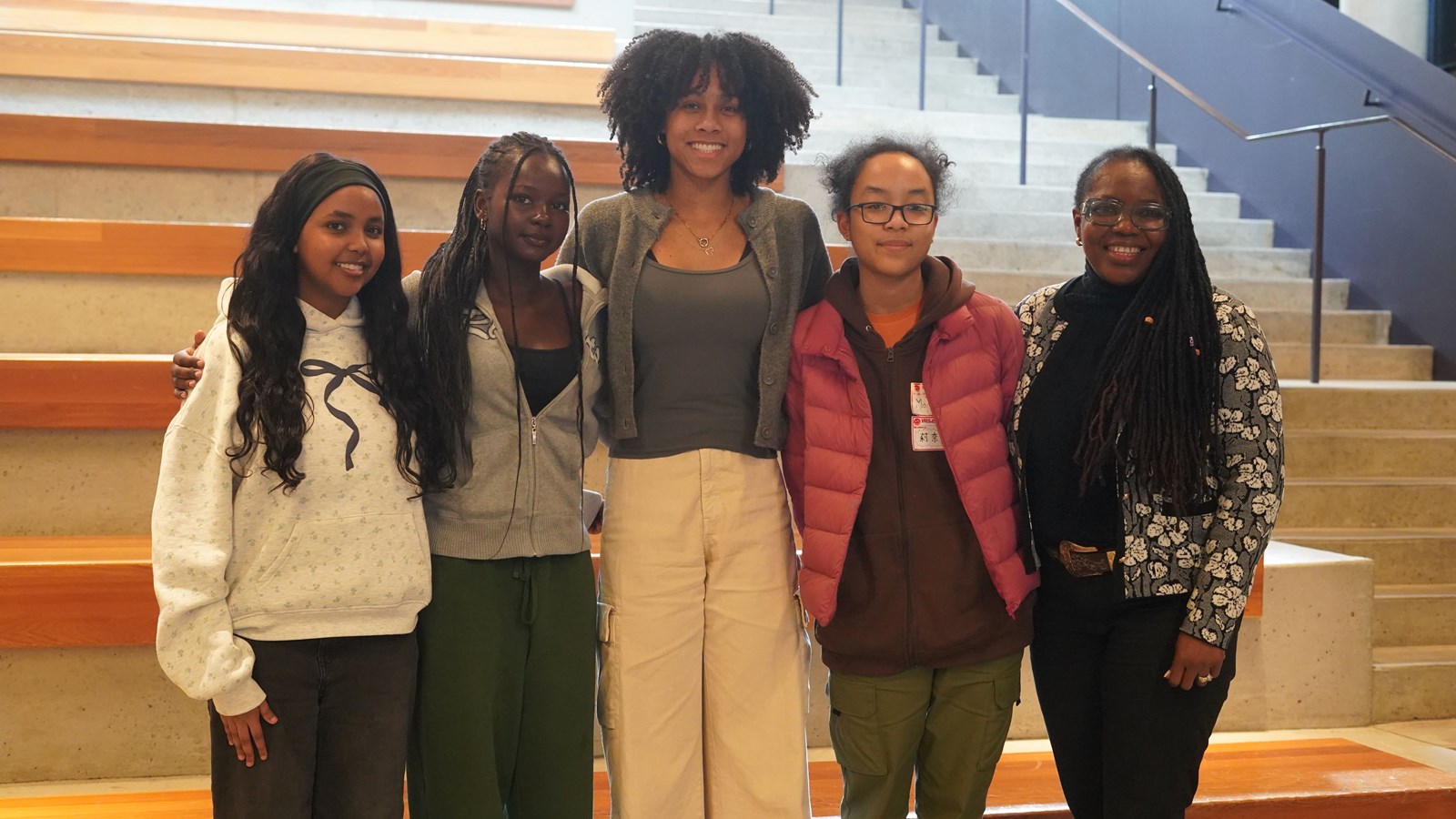
VSB teacher Dr. Joann Anokwuru lives by an African philosophy known as Ubuntu. This guiding principle translates to, “I am who I am because of who you are.” Ubuntu emphasizes the importance of community over individualism, highlighting the interconnectedness of all people. It encourages collective well-being and shared responsibility.
Dr. Anokwuru says Ubuntu is essential to understanding Black history and Black people.
“All Black people, regardless of if they were displaced by slavery or not, have this within them. This desire to be with one another and to relate to one another,” she says. “African communities are not individualistic. In my community, your happiness is my happiness; your joy is my joy; your sorrow is my sorrow.”
For Dr. Anokwuru, this philosophy informs her approach to teaching.
In her role as district resource teacher for inclusive education, she recently facilitated a workshop on Culturally Responsive Teaching (CRT) for VSB educators alongside Melanie Tanaka and Catherine McElhone. In the workshop, educators were encouraged to effectively engage students in learning by infusing their cultures, celebrations and traditions into the classroom.
Dr. Anokwuru does the same. Throughout her time as an educator she has introduced students to her own Nigerian culture through food and music. “We need to bring in more of the human factor,” she says. “This is how we create community.”
Black history, Black Futures
This school year, Dr. Anokwuru also started teaching VSB’s history of African descent course. From ancient African empires, the transatlantic slave trade, the civil rights era and beyond into Afrofuturism, the course she leads explores the rich history of people of African descent through an Afrocentric lens. Moving through history in this chronological way is important because as she says, “The past informs the present in so many ways. In the course we talk about how history informs our futures as Black people who live in BC.” Students learn about important Black historical figures from BC’s history such as James Douglas, the first Governor of BC and hear directly from prominent Black speakers of present day, such as Dr. Yabome Gilpin-Jackson, SFU’s Vice-President, People, Equity and Inclusion.
Earlier this month, Dr. Anokwuru guided a group of students from King George, Van Tech, Kitsilano and Britannia secondary schools to attend the Black Futures kickoff event on February 5 at UBC. In this multi-week program, students learn about Black history while participating in information sessions, lectures and teamwork activities with peers from schools across the lower mainland. The event began with students learning about important Black historical figures and about the unique scholarships and educational opportunities available for Black students in BC.
“I think it’s pretty cool that we can connect with Black students from different cities,” says Athaye, a Grade 12 student from Van Tech.
Black History Month
For Dr. Anokwuru as a Black person now living in North America, learning about Black history was experiential. It was important for her to track the history of her people by visiting the ports in Africa where slaves were traded as well as the ports in North America where many Africans ended up.
“It was closure for me to see and hear so much history. To visit places where slaves and slave masters walked. For me as an African person, I needed to experience it,” she says.
While Black History Month for Dr. Anokwuru is personal, she says that approaching Black history as a non-Black person should not be intimidating.
“You don’t have to be Black to celebrate.” She encourages everyone to read more and be intentional about learning about Black history and how it has shaped the world as it is today. This can be done by celebrating Black excellence or taking a deeper dive into Black history through books and documentaries.
For Dr. Anokwuru, celebrating Black History Month is Ubuntu in action. Honouring the legacy and contributions of Black people in Canada helps foster greater empathy, understanding and respect for one another.